

You’re an artist who puts work online, but posting your art isn’t getting views. What other option is there?
You might have googled something like “how to get my art seen online,” only to get abstract tips that don’t actually steer you towards success.
Don’t lose hope: let’s spare the motivational-speaker talk that surrounds your YouTube art feed, and stick to straightforward advice that helps you market your artwork.
On this page
Success isn’t just views or likes; the goal is to make it easy for people to find you and come back to you. That is success, because if you’re invisible, commissions will go to someone easier to find.
“It’s not enough to be good. In order to be found, you have to be findable.”
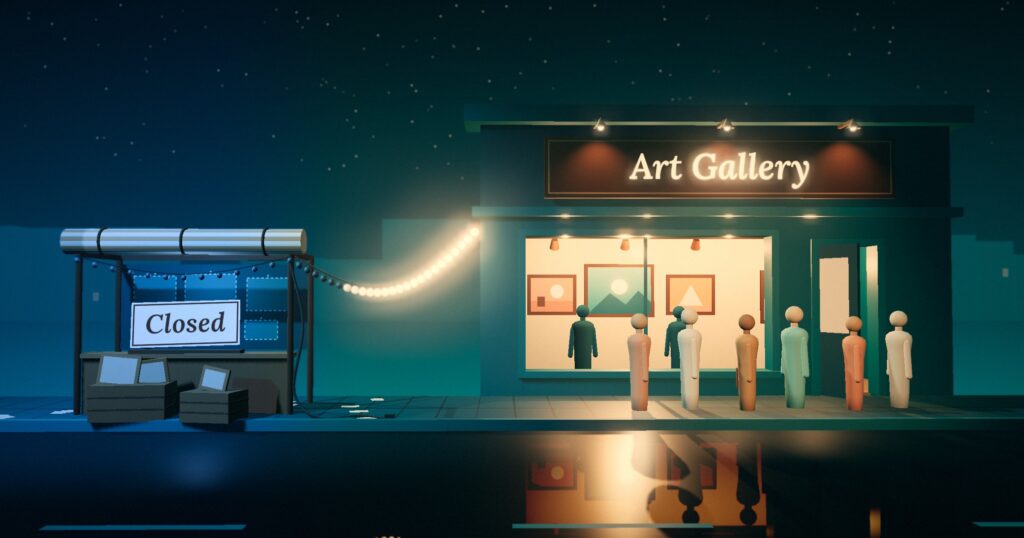
Imagine you took all the artwork you’ve ever posted and hung it in an art gallery (bear with me).
A gallery needs a sign out front so people know it exists, a door they can walk through, and a guest book so visitors come back for the next show. Without those, you’ve got great work hung in a room nobody walks into.
Most artists skip the gallery and set up a booth at a crowded fair instead. People wander past, and when the fair ends, the booth gets packed up. That booth is social media.
Your gallery is the space you own: your website. If you don’t have one yet, that’s exactly your problem.
So ask yourself: where does someone go when they want to see more of your work? And if Instagram disappeared tomorrow, what would you still have?
Here’s what we’ll cover:
- Why posting everywhere feels like progress but dies fast
- What to actually do after you post, that keeps working
- A simple plan for building your own permanent gallery, starting now
What Marketing Your Artwork Actually Means
First off, the word “marketing” isn’t a bad word. I recently saw a Reddit thread where the poster put “market” in quotation marks as if it was uncomfortable or out of the ordinary to say. This is a damaging mindset to have while you’re trying to put yourself out there, because it’s truthfully nothing to be afraid of.
Marketing your artwork simply means making yourself findable, which isn’t the same as posting more aggressively than before.
Being da Vinci himself wouldn’t be good enough for as long as nobody can find you on Google, because people can’t search for a name they’ve never heard of.
So what about doing fan art to get recognition? This is actually one of the most common misconceptions about getting found as an artist.
With fan art, people search for the characters or movies they’re interested in. Unfortunately, searchers rarely think about the artist because – in that moment – they just want to see their favorite character.
Fan art gets attention, but the attention goes to the character, not you. It only helps your name if it leads people somewhere they can find more of your work. Ex: a piece that gives viewers a reason to click through to your portfolio.
Even if you haven’t built your portfolio yet, understanding this is how you start strong without wasting your time.
The Booth: Attention That Doesn’t Last
Now booth’s aren’t entirely bad, just different. Booth’s can be great, because crowds walk by, people really see your work, and some artists do well at it.
A booth can show up in different forms, not just ones in the fair. Each one garners attention in their own unique ways:
Social media: Your reach is dependent on how often you post and how algorithms treat you. When you stop posting, the attention disappears. You are mostly relying on gambled viewership and hoping customers contact you.
Art fairs and markets: Real sales with genuine conversations, but only for that weekend. Best case scenario, foot-traffic and sales are very strong, but always come to a close once everything’s said and done.
Paid ads: Instant attention that dies the second you stop paying for it. This generates short-term engagement that isn’t actually creating a stable audience like you imagined.
Collabs and features: A spike of new eyes that fades once users scroll to the next post. The short buzz can be profitable, but only gives users an incredibly short window to say “yes” or “no”.
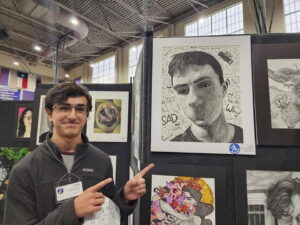
I learned this firsthand in high school. A piece of mine advanced to state in the TX Visual Scholastic Arts Event (VASE). I got the highest possible score I could on my piece. Judges saw it, other artists saw it, so I was on top of the world that day. Then I went home, and that was it. Anyone who liked that piece had no way to see more of my work.
Every booth here rents you attention, yet none of it is permanent enough to build something deep. Something that can breathe and work without you. Every method trades something for attention, whether it’s time, money, effort, or all three.
If you still feel invisible even after posting every week and getting views, it’s because that’s what the booth is designed to do. A lucky few artists may have built a brand that way, but you don’t want to gamble your living on those chances.
Temporary work is tiring, so make the most of your time and money with this permanent fix; the gallery. A booth needs you standing there, but the gallery doesn’t.
The Gallery: What Keeps Working
A website doesn’t just replace your business cards, it invites people into your world. Let me paint a picture for you 😉 :
A woman wants a special painting commissioned of her 10 year old dog, so she gets to searching.
She looks up “custom pet painting,” and your site comes up, this calls back to the gallery sign earlier. People find you by what you do, not your name.
She lands on your site and sees your pet paintings. The bigger the collection, the more she trusts you with this special project of hers. She walked through your gallery door and saw your work along the walls.
But wait, she’s not ready to buy yet. She wants to save her money and think about it. People rarely buy on the first visit. She’s gone.
The good news is: thanks to your site’s email list (aka: your gallery’s guest book), she leaves her email so she can come back when she’s ready. Weeks later, a new pet piece lands in her inbox – she’s been thinking about it, she just needed the reminder – and that’s when she finally reaches out.
Congrats, you just landed a client while sleeping (or whatever it is you do).
You weren’t posting on social media at any point in that story, and this “marketing” stuff finally worked. Because you chose the gallery, not the booth.
This might sound like a lot of setup, or like running a business.
You’re an Artist, Not a Business
You might be thinking, “This sounds like running a business, but I’m just an artist”.
Taking commissions already makes you a small business, whether you call it that or not, and that’s not a burden; it’s an achievement. Building a gallery isn’t selling out, it’s just making it possible for the right people to find your work.
I want to help break the cycle of artists feeling out of place. Breaking away from the discomfort for marketing, and transforming into proud entrepreneurs. Because when artists break through that personal barrier, they take charge and unlock their potential.
From here on out, don’t expect instant results like you would for an Instagram post. Judging your progress after only a month of posting doesn’t give you a verdict anyway. Building a real gallery takes months (even years) of consistent slow climbing, and that’s ok. You’re building this brick by brick.
A gallery made in a week isn’t built with the proper care it needs, so take your time.
Remember; You want people finding you and coming back again and again. Those aren’t likes, that’s what true engagement is.
How to Market Your Artwork, Step by Step
Marketing your art online involves these 5 steps:
- Get your foundation ready
- Build your website
- Point every profile to it
- Set up an email list
- Get found in search
Step 1Get your foundation ready
Pick one action you want visitors to take after seeing your work, whether that’s buying a piece or scheduling a phone call.
Use the same artist name everywhere. It’ll most likely be your first and last name. Just keep it consistent, because being easy to find is the name of the game.
Step 2Build your website
Build a simple site that shows visitors your best work, who you are, and how they can commission you. This is the hardest step for marketing artists, but it’s what separates you from the average artist.
Focus on simplicity. Your site isn’t one of your pieces, it just needs to exist so it can show your work.
And have fun with it. It’s a genuinely enjoyable process if you let it be.
Step 3Point every profile to it
Every post, bio, and fair booth sends people to your site. Now you can continue to do what you were already doing, but with a purpose.
Step 4Set up an email list
Add a simple email signup to your site so visitors can come back when they please. Since your initial visitors will be from social media, have this set up before site launch, ensuring everyone can be a potential returning visitor.
Step 5Get found in search (SEO)
Search Engine Optimization (SEO) is the act of making your site easier for users to find. Eventually, you can optimize your site well enough that you come up in searches like “custom pet paintings.”
This is our long-term step. It takes months, but it’s what keeps working longest.
There’s a learning curve, but getting found is exactly what I help artists and creative businesses do.
If you’re not sure where to start, send me a message and ask.
Send me a messageMake it yours: Check off what you’ve already done below, and you’ll see exactly where to start. When you’re done, download your plan so you can take your progress with you!
Build the Gallery. Keep Your Booth
Don’t worry about perfecting your gallery yet, save that attitude for your artwork. Just make sure it exists, because great work hung means nothing when nobody can see it.
Don’t give up on the methods you’ve started with, now you keep it up and point that work to your homebase.
Don’t wait another day. Take 5 minutes after reading this to look up some platforms that can serve as your gallery before committing to a website (platforms like Cara and Behance are great for storing your portfolio and gaining traction). You don’t even have to decide yet, just see what your options are.
Do what you’ve been waiting for. You looked up how to market your artwork for a reason. Now that you know what actions to take, get busy!
Questions Artists Ask
Do artists really need a website?
Yes, if you want people to find you and come back to you. Social media profiles belong to the platform, and they only work while you keep posting. A website is the one place online that’s actually yours, where every post, bio, and fair booth can send people. It doesn’t need to be fancy. It just needs to exist.
Can I market my art without social media?
Yes, but expect a slower start. Without social media, your first visitors come from search and word of mouth, and both take time to build. The upside is that search and an email list keep working when you stop posting. If you do use social media, treat it as a way to send people to your site, not the place your audience lives.
How many platforms should I be on?
Fewer than you think. One or two platforms you’ll actually keep up with beat five you post to whenever you remember. Pick the ones where your kind of buyers already spend time, use the same name on each, and make sure every profile links back to your site.
Is posting fan art bad for getting noticed?
No, fan art is fine, and it’s usually the most fun to make. The catch is that people find it by searching for the character, not for you. So when you post it, make it easy for viewers to see your name and find the rest of your work on your site.
Do likes and views matter?
A little, but they aren’t the goal. A like tells you someone glanced at your work for a second. What actually matters is whether people can find you on purpose, remember your name, and come back when they’re ready to buy.
How long does it take for marketing my art to work?
Usually months, not weeks. Social media can get you attention quickly, but it fades just as fast. Your website, search, and email list are slower to get going, but they build on each other and keep working long after you stop posting. Give it a few months before you judge the results.
Do I need to make a website to sell on Etsy?
Good question! Etsy already has searching customers, which a website will only have if successful in the long term. Site traffic is tough, but it’s realistic if you’re consistent. The catch with Esty is that you’re shop is still in Etsy’s space. That means dealing with their rules, fees, and other work competing right next to you. So, while you don’t need a website to sell on Etsy, I suggest using both for your brand and linking them to each other.