

Your bakery can have the best sourdough bread in the city, but if Google doesn’t see you, you might as well turn your ovens off. The fact is, if competing bakery owners know and apply SEO to their site, they will have a stronger web presence than you. They get the customers, and your local bakery can’t grow. No ifs or buts about it.
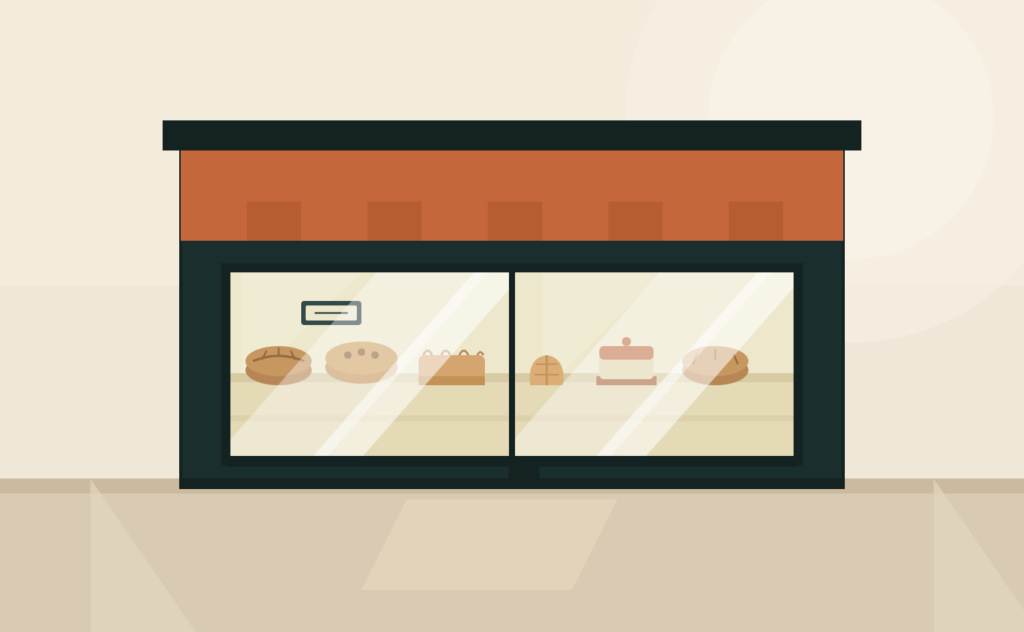
This “online stuff” can be an incredibly frustrating roadblock for busy bakers, when you’d rather spend your time making your cake recipe the best it can be. But, think of your website as a digital bakery storefront window. If that window is dull, sad, and empty, people will walk right by.
If it seems like you’ve exhausted all other options when it comes to getting new customers, I’m here to tell you that if you haven’t yet developed an online presence: well, you’re missing out.
A blog puts your baking expertise on display to catch your market’s attention, and it’s the natural next step in growing your local bakery!
So, to become the popular spot in town, you have to satisfy the Digital Health Inspector: Google. If you want to pass their inspection and stay in business, you need SEO (Search Engine Optimization)—the fancy acronym you keep hearing about.
Google is checking your shop for quality, trust, and real expertise before it lets you market to your whole city.
In this post for local bakers, I’ll be giving you the 2 core ingredients to pass that inspection, push your competitors to the sidelines, and get valuable foot traffic through your door!
- Answering the right questions (Intent)
- Sharing something only you know (E-E-A-T & Information Gain)
But before we dive in, let’s briefly go over what a blog truly is.
The same search, two outcomes
When someone nearby looks for a bakery, Google decides who they find first. You want to be the shop that shows up.
A stronger web presence wins the customer. Everything ahead is how you become the bakery that shows up.
What Exactly Is Blogging?
We just introduced our 2 main ingredients on how to pass the inspection and use SEO, but blogging is the primary medium in which we execute these strategies.
A blog is how you show expertise, writing blog posts for users so you can personally educate newcomers on a topic they don’t fully understand. This is where the trust building comes in.
Without one on your site, you only have your portfolio and “About Me” section, which won’t give users enough trust to make their way to your bakery.
The good news is: You can write about your favorite topic and simultaneously show off the trustworthy person that you are, and you can talk about anything you want!…with exceptions.
Let’s say you worked hard for years on your blog and built the most credible blog in the baking industry. You would be the person that people trust, and you’d have the authority on the topic over anyone else who wants to talk about baking. Now, this is what gets the maximum amount of attention to your local business, and genuinely gets foot traffic through the door. That’s the goal, right?
So, while you can’t just write about anything to build that authority, you have to give your readers exactly what they’re hungry for.
Ingredient #1: Answering the Right Questions (Intent)
In the baking world, search intent is just a fancy way of saying: “What is my customer wanting when they walk in my digital shop?”
When someone searches for “how to fix cookies that are too flat,” they’re not looking to buy a croissant; they want help. If you give a sales pitch instead of a solution, they leave. Google sees this “bounce” and marks your shop as unhelpful to people in the area, losing you potential returning customers and hurting future business.
Two Types of Intents
The “How-To” (Informational Intent): A rookie baker wants a solution to why his cake isn’t rising enough, and the last thing he wants to do is talk to a salesman.
When he searches on Google, his goal is solving his problem and learning how to not make the same mistake again.
In the past 20+ years, Google has always been the number one way to answer questions, and according to Amra & Elma’s Top 20 Search Intent Statistics 2026: 57.3% of Google searches have informational intent behind them.
Instead of people coming to your store and asking questions, most informational traffic is online, further increasing your need to digitally expand and prevent sole reliance on organic foot traffic.

The “Ready-To-Eat” Buyer (Commercial Intent): What’s the difference between a rookie baker searching for “how to bake a cake,” and a bakery owner searching for “Sam’s Club vs. Costco cake ingredient prices”. Answer: The rookie wants to learn, but the bakery owner is investigating and evaluating.
Users with commercial intent are at a delicate stage between buying or quitting their search altogether (due to many factors).
After investigation or creating carts on e-commerce stores, only about 1% to 4% will transition to transactional intent (actually buying what they’re shopping for).
With this newfound knowledge, you can apply this concept to what people are searching for. By matching your content to consumer intent, you’re giving answers to the people that are asking the questions.
Read the craving
A searcher walks into your digital shop. Are they here to learn, or here to buy? Call it before you scroll down.
Ingredient #2: Sharing Something Only You Know (E-E-A-T & Information Gain)
E-E-A-T stands for Experience, Expertise, Authoritativeness, and Trustworthiness. This is Google’s criteria for evaluating the quality of a website’s content.
Experience: Showing behind the scenes content to prove you aren’t an AI-generated brand, and sharing personal stories that give users original information. In 2026, a raw unedited video of you pulling a tray out of the oven is worth more than a $400 stock image, because it proves real experience (and makes you look good doing it).
Expertise: The best way to show expertise on Google is by helping users in ways that others haven’t before. This means providing quality information to users that other credible online figures aren’t. This is a value metric recognized by Google, called information gain.
Examples of information gain can be: beating competitors to the punch by sharing expertise about the newest industry trends that haven’t been properly understood yet by the average home baker, or simply telling personal stories that provide strong and valuable lessons that give users a different perspective on topics they may already be familiar with.
Authority & Trustworthiness: Since Google is your bakery’s digital health inspector, it wants to see if you have credibility. This is when you take off your humble gloves and show Google what kind of establishment you are!
Think of it like your bakery’s own personal resume: Your site’s ‘Awards & Honors’ section should include company accomplishments and milestones such as your “Outstanding Bakery” awards, the 20+ positive Google reviews on your profile, and real photos of you on and off the job.
As you can tell, the common theme here is proving yourself (as both an expert and real person), but doing it in a personable way… so no talking users’ ears off about how awesome you are.
Users need to be digitally fed a balance of the personal likeability that you provide (so they listen to you), and your expert insight that actually helps them.
The harsh reality is: From Google’s perspective, factors like experience and expertise are nonexistent if you don’t make them known, so don’t be afraid to show yourself off!
Trust is the foundation
Google grades your shop on four things. Read them top to bottom and they spell E-E-A-T. Notice the tier holding up the rest: Trust at the base. Everything above is how you earn it.
Experience
You have actually done it. A raw clip of you pulling a tray beats a $400 stock photo.
Expertise
You know it deeply, and explain what other bakers skip. Google calls that information gain.
Authority
Others vouch for you: awards, milestones, and real Google reviews.
Trust
The foundation. When people feel safe choosing you, they walk through the door.
So, Where Do You Start?
I know that this is a lot of information to grasp in one read, and I’m sure you’d rather never look at this again! The good news is: This isn’t knowledge that you need to completely understand overnight.
Blogging is a consistent process that unfortunately won’t sell out your pastries after publishing a single post. So, don’t worry about carefully crafting “the perfect post” every 6 months, because a thoughtful post every 2 weeks will prove more valuable and authentic than a bloated quarterly post that tries to bite off more than it can chew.
Day One Is Better Than One Day (Start NOW!)
For your first post, think about a common issue or question that you’ve heard countless times, and answer it!… but share a thoughtful personal story that delivers a fresh, valuable perspective on a familiar issue to home bakers and bakery owners alike.
After you publish your first post and remain consistent in providing valuable information to users, each post will only build on the last. Imagine writing a blog post 6 months ago, and realizing that the small commitment you made led to more foot traffic and online authority half a year later.
So, not only will you continue to establish your credibility with Google, your blog posts will do the online marketing for you. That’s the goal, and it should be used as motivation as you’re writing your first few posts.
The Baker’s Writing Process: The Easy Way
Step 1: This is your first draft. Think about an issue in the baking world, and write freely. Share any relevant stories or opinions you have on the topic in a thoughtful manner.
- Prioritize the goal of bringing value to readers.
- Don’t wait to help readers with a lengthy introduction, or they’ll “bounce” off your site and listen to your competitors instead.
There are 2 recommended approaches you can take during these early posts…
Cast a wide net, or dig a deep well
Early on, two solid angles to pick from. Each one grows your blog in a different way, so it helps to know the trade you are making.
Broad
For everyoneTackle a problem almost every baker has run into. Lots of people find it, and each one leaves a little better off.
Niche
For someoneTackle a specific issue only some bakers face. Far fewer people find it, but the ones who do are deeply satisfied.
Neither wins by default. Pick the one that fits the story you most want to tell first.
After this step, you’ve completed the hardest part! Now, let’s move on.
Step 2: Edit this first draft. Focus on keeping the conversation about the main topic, and limiting fluff.
It’s important to have fun with writing these posts, but keep jokes and small-talk relevant to the topic (as well as balanced throughout the post, instead of all of your personable moments in a single paragraph).
- Use E-E-A-T to judge the value your post is bringing to users.
Step 3: Put basic SEO formatting into practice (headers, short paragraphs, a keyword in your title). Jeff Goins has a great post called SEO Basics for Bloggers & Beginners (But Not Bots), a quick and concise read perfect for any busy bakers starting a blog.
- After optimizing your post for Google and giving your writing a final read, you’re ready for the last step!
Step 4: Publishing & Promoting (sharing to social media, linking it to your site, and spreading the word.)
- To get the best results, promoting your content online is going to be an ever-consistent effort. Remember, your perfected sourdough recipe doesn’t matter if no one’s there to taste it.
Pass the Inspection
If you’re a baker and you made it to the end of this post, you’ve already started this ambitious endeavor (and that Digital Health Inspector won’t know what hit ’em). Props to you.
Now, it’s time… seize your moment and use your expertise to help bakers in need!
Go write that blog post and attract those hungry customers!
The stuff you’re probably wondering
A few things that come up right before a baker starts that first post. Tap whichever one is nagging at you.